The Broadcom acquisition of VMware , completed in November 2023, has triggered one of the most consequential shifts in enterprise virtualization economics in years. What seemed like just another corporate acquisition quickly turned into a wake-up call that’s still echoing through data centers today.
If you are running a hosting company, you have probably spent the last year trying to make sense of the new licensing landscape. You’re not alone. The changes have been nothing short of seismic, and many companies are still piecing together what it all means for their bottom line.
Let’s cut through the noise and break down exactly what’s happened, and more importantly, what you need to do about it.
The Acquisition That Changed Everything
The timeline tells the story. Broadcom closed its $69 billion acquisition of VMware in November 2023. Within weeks, the announcements started rolling in. By early 2024, the VMware everyone knew had fundamentally changed.
Broadcom didn’t waste time putting its stamp on things. The company moved quickly to reshape VMware’s entire business model, and hosting companies found themselves scrambling to understand the new rules of the game.
Regulatory scrutiny has followed these changes: European cloud provider group CISPE has legally challenged the EU’s approval of the VMware acquisition, arguing that the new licensing terms harm competition across cloud services.
What Changed: Technical Licensing Shifts Explored
For hosting companies, this isn’t just a licensing update. It’s a margin-impacting business event.
At Nuventure, we work exclusively with hosting providers navigating exactly these transitions: from licensing audits to hybrid redesigns and managed infrastructure optimization.
If you’re unsure how these changes affect your margins, it may be time for a strategic infrastructure review. https://bit.ly/49TPIvA
1. Elimination of Perpetual Licenses
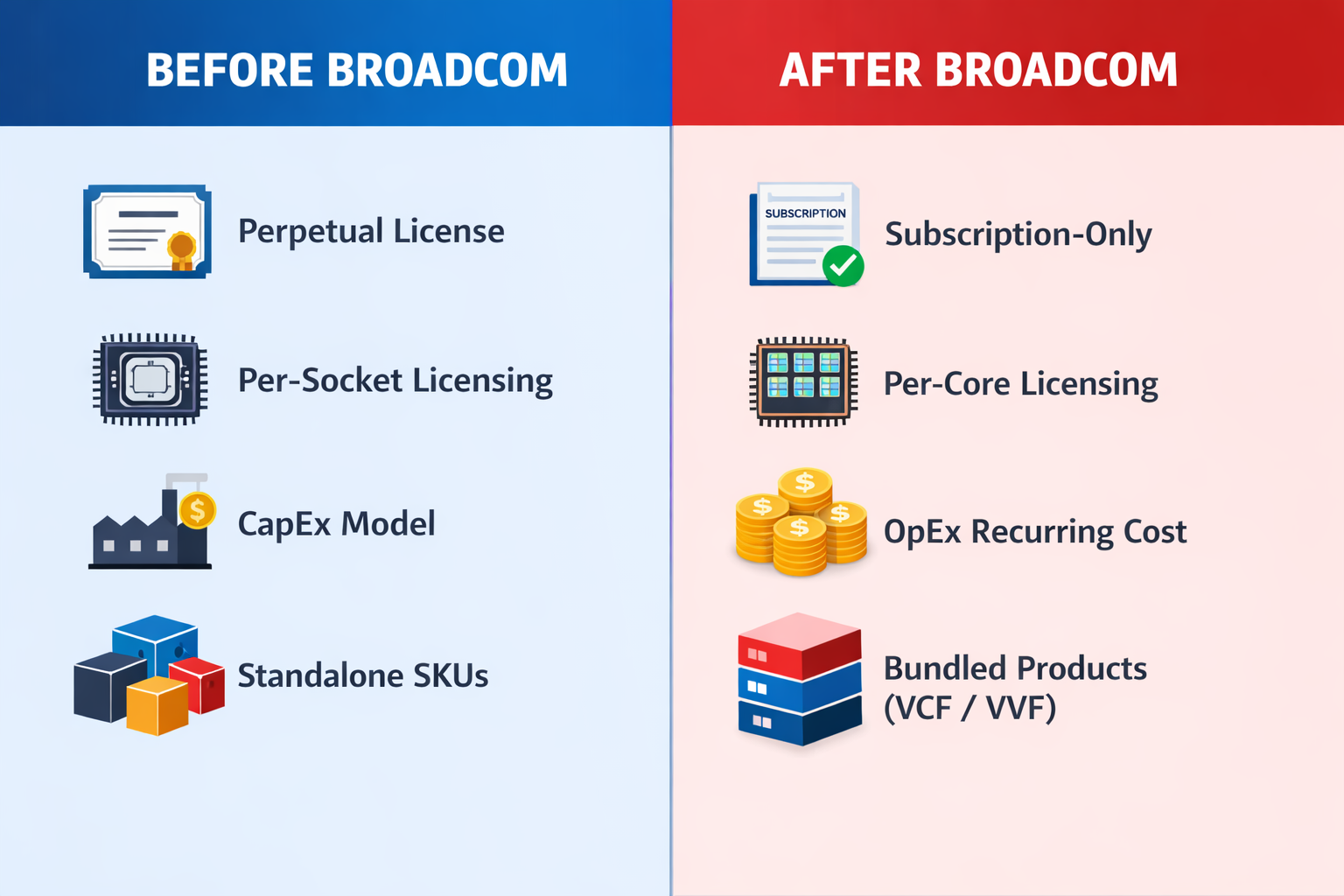
Broadcom ended the sale of perpetual VMware licenses in early 2024. While existing perpetual licenses continue to function, support and maintenance from VMware cannot be renewed once they expire, driving customers into subscription contracts if they want ongoing support and updates.
Impact: Capital expenditure (CapEx) budgeting for licensing is effectively gone; everything must now be planned as recurring operational expenditure (OpEx).
2. Subscription-Only Contract Model
All VMware products today, from vSphere to vSAN , require subscription licenses that are term-based (typically 1-3 years, sometimes longer). There is no longer an option to buy software once and own indefinitely.
Why this matters for hosting companies:
- Subscription fees are recognized as an ongoing cost.
- Renewal timing becomes a strategic financial planning point, not a trivial administrative date.
- Late renewals may carry penalties or restrictions.
3. Per-Core Licensing vs. Per-Socket
One of the most significant technical changes has been the shift from per-socket licensing to per-core licensing.
Under the old model:
- One license covered a CPU socket regardless of core count.
Under Broadcom’s model:
- Each individual physical core must be licensed.
- Licenses are sold in fixed packs (commonly 32-core packs), and certain minimums apply even if you don’t use that many cores.
Example: A dual-socket server with 32 cores per CPU now requires licensing for 64 cores, often sold as two 32-core packs, a radical shift from older licensing.
4. Bundling and SKU Consolidation
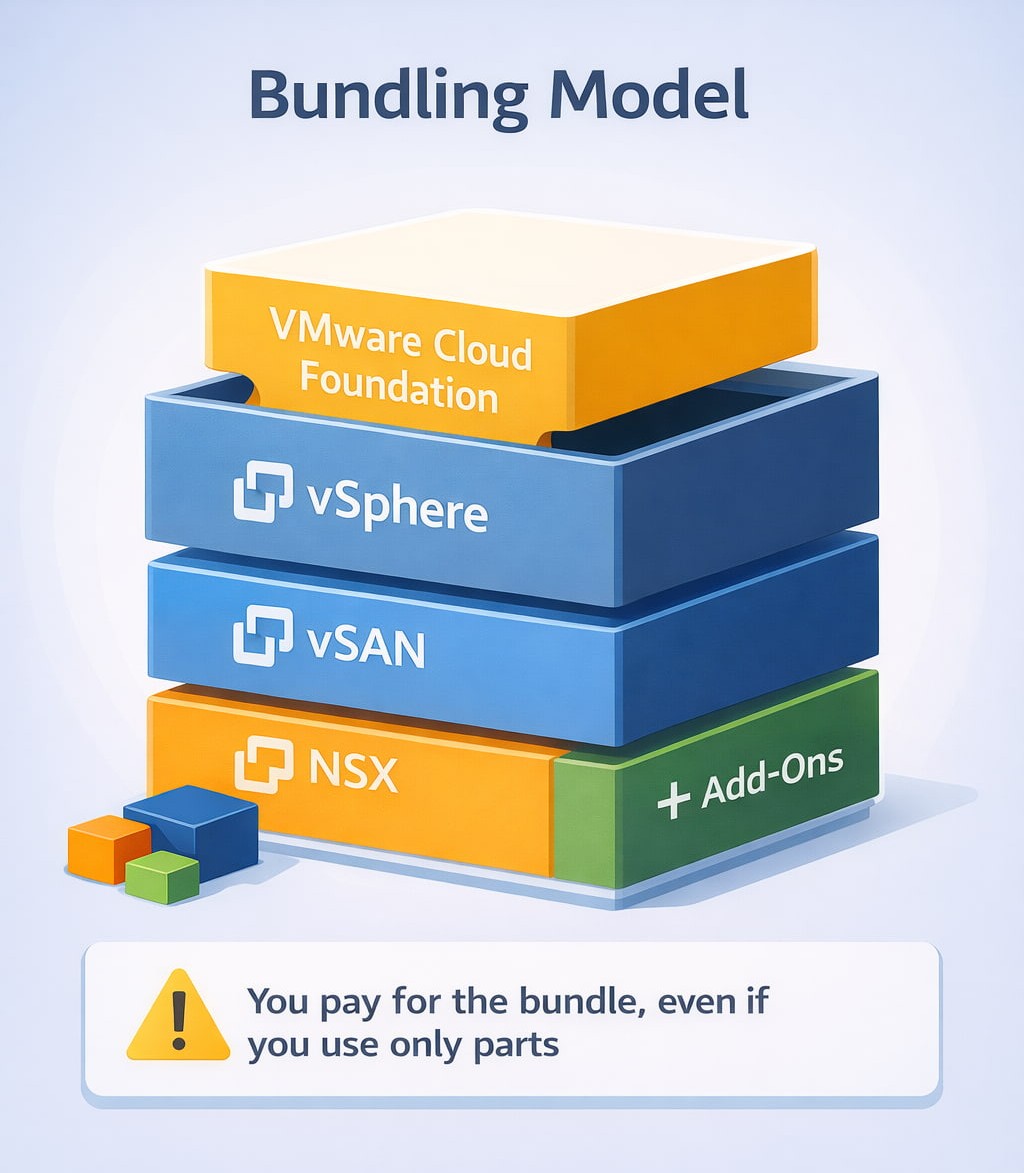
Rather than selling products individually (vSphere, vSAN, NSX, etc.), Broadcom now sells them in a small set of bundled offerings such as:
- VMware Cloud Foundation (VCF)
- VMware vSphere Foundation (VVF)
- (with optional add-ons)
Standalone SKUs are mostly retired.
Impact: You pay for more than you need, a tactic that simplifies Broadcom’s go-to-market, but may inflate costs for hosting companies that only need specific components.
The Real Cost Impact on Hosting Providers
Analyst and industry reports suggest that renewal costs for some organizations have risen dramatically: in some cases, between 200% to over 1,000%, depending on workload size and contract history.
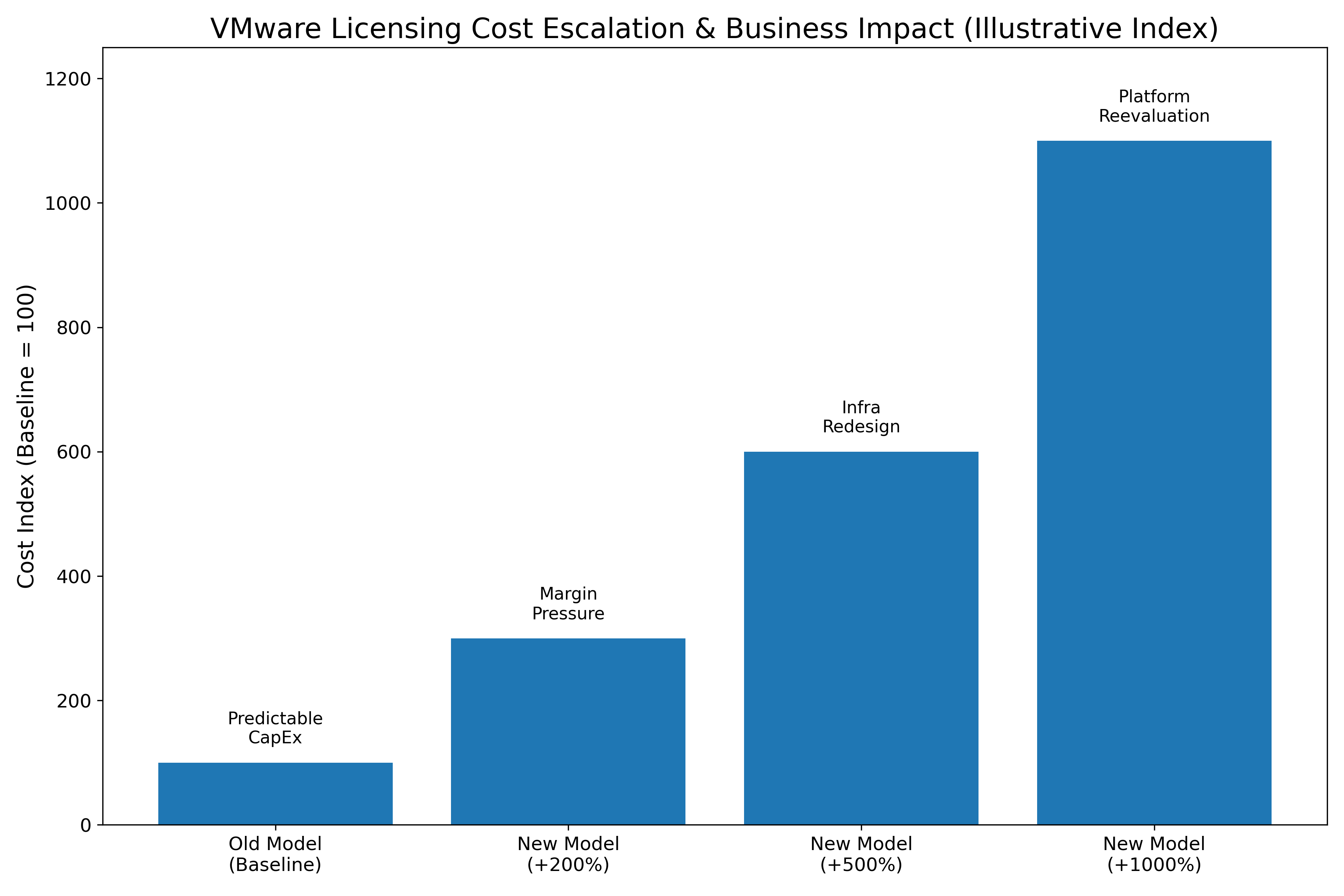
Illustrative cost index comparison showing reported VMware renewal increases under Broadcom’s subscription model. Actual impact varies by infrastructure size and contract structure.
These increases come from:
- Subscription vs perpetual cost differences
- Per-core pricing
- Bundled licensing requirements
- Minimum core count constraints
- Mandatory multi-year deals in many cases.
For hosting environments with many mid-sized nodes, the move can be budget-breaking if not proactively planned.
Channel and Partner Disruption
Broadcom has also revamped VMware’s partner programs, significantly shrinking the pool of authorized partners and leading to partner exits or reassignment.
This has several implications for hosting companies:
- Fewer reseller options: reduced competition.
- Less choice for procurement and support services.
- Partner relationships you’ve relied on may no longer exist.
These changes aren’t just noise, they affect pricing leverage, contract flexibility, and support availability.
Technical Compliance and Usage Considerations
Minimum Core Counts
Broadcom at one point implemented minimum core-count licensing rules (e.g., minimum 72 cores per order), which forced significant over-licensing for modest deployment, although some of these rules have since been adjusted or challenged in practice.
Support on Perpetual Licenses
Existing perpetual licenses are still usable, but lack of renewable support exposes organizations to security, compliance, and risk issues.
Impact on SMB and Edge Deployments
Smaller hosting companies and SMBs report a disproportionate cost increase due to minimums and high entry points. Many of the legacy “Essentials” retail SKUs are discontinued or hard to source.
When to Consider Alternatives
Industry analysts and market observers note that some customers are actively evaluating other platforms due to cost and licensing dissatisfaction:
- Gartner predicts possible workload erosion as customers explore alternatives.
- Case studies show enterprises migrating to virtualisation alternatives like Red Hat OpenShift Virtualization, slashing VMware licensing fees.
Common alternatives being considered:
- Proxmox
- Nutanix (AHV)
- Hyper-V
- KVM/Cloud-native platforms
- Public cloud VMs where licensing is included
However, migration is not trivial , it carries operational, training, and compatibility considerations.
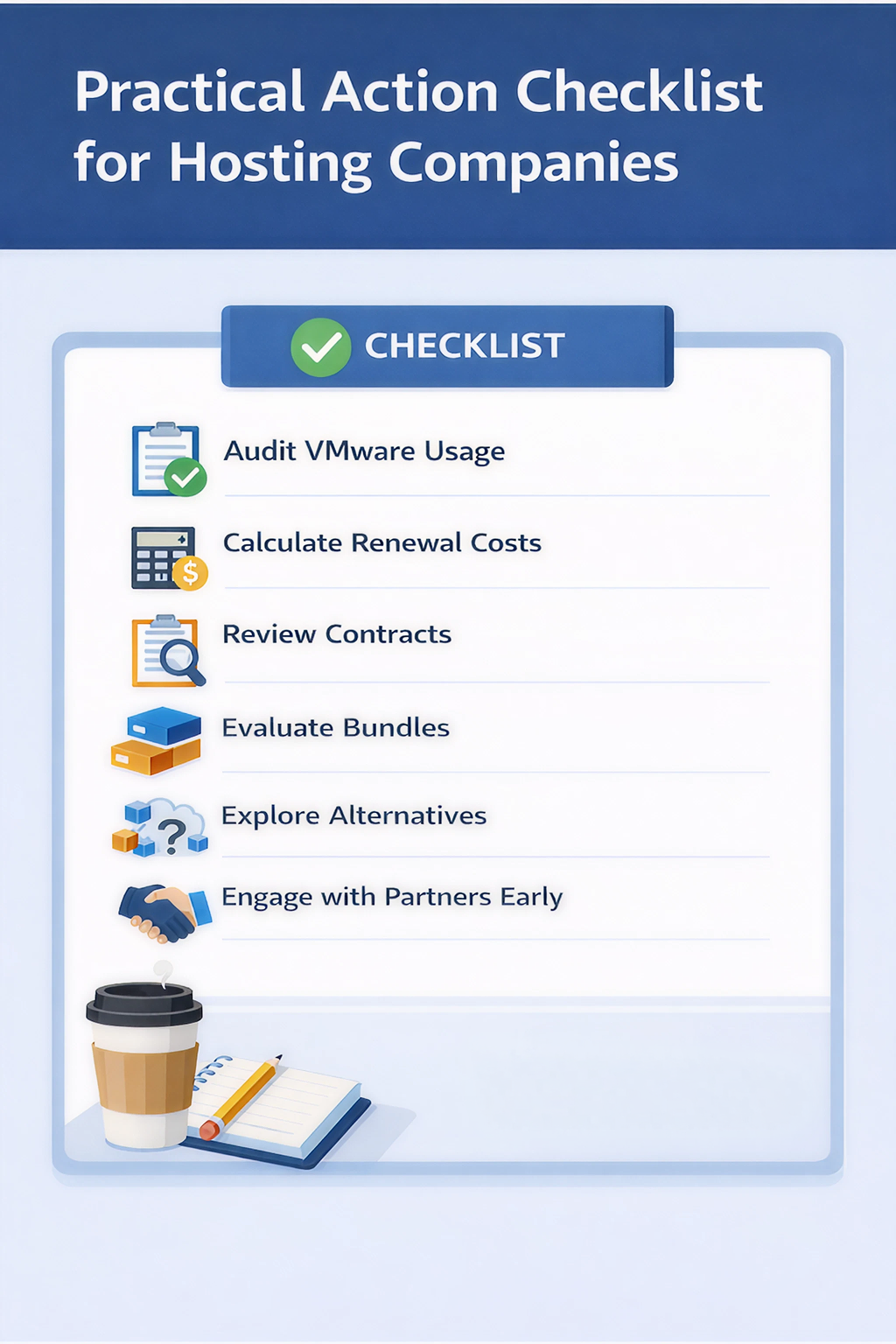
Practical Action Checklist for Hosting Companies
- Conduct a detailed inventory of current VMware usage.
Count cores, sockets, workloads, and existing perpetual vs subscription entitlements.
- Calculate renewal costs under the new model.
Model per-core pricing based on current hardware realities.
- Review contractual terms closely.
Look for renewal windows, auto-renewals, penalties, and minimum-term commitments.
- Assess whether required features in bundles align with your needs.
Many hosting companies are paying for features they never use.
- Explore alternative hypervisor/virtualization solutions.
Assess trade-offs in migration complexity vs. long-term licensing cost structures.
- Engage with partners early, don’t wait until renewal notices arrive.
Options may be limited if left to last minute.
How Nuventure Helps Hosting Providers Navigate This Transition
1. VMware License Audits
We assess your existing VMware model and their financial and operational impact under Broadcom’s revised licensing framework to help you plan proactively
2. Renewal Strategy Modeling
We model 1-year vs 3-year vs hybrid subscription scenarios.
3. Alternative Platform Assessment
We evaluate Proxmox, AHV, Hyper-V, KVM, and cloud-native options based on:
- Performance impact
- Operational retraining cost
- Licensing structure
- Customer SLA risk
4. Hybrid Infrastructure Strategy
Not all workloads need to migrate. We help define:
- What stays on VMware
- What moves
- What gets containerized
5. Managed Support & Operational Optimization
For hosting companies without internal infrastructure management maturity, we provide:
- Infrastructure management
- Patch management
- Capacity planning
- Cost optimization
Closing Thoughts: The New Reality
Broadcom’s licensing overhaul represents not just a pricing shift, but a strategic rearchitecting of how VMware delivers value and captures revenue. For hosting companies, that means higher costs, more complexity, and less flexibility, unless proactive steps are taken.
However, the opportunity lies in understanding this shift deeply: backed by research, technical knowledge, and strategic planning, to make informed decisions rather than reacting to renewal cycles.
Whether you optimize existing VMware deployments, negotiate smarter terms, or even diversify platforms, the key is being informed and proactive; and basing decisions on data, not hearsay.
At Nuventure, we understand that these licensing changes aren’t just technical challenges, they are business challenges that impact your profitability and your ability to serve your customers.
Whether you need help auditing your current usage, optimizing your licensing costs, exploring alternative platforms, or implementing a hybrid infrastructure strategy, we have been there and done that.
You don’t have to figure this out alone. Our managed services team specializes in helping hosting companies like yours make smart infrastructure decisions that protect your margins while maintaining service quality.
Broadcom’s changes aren’t temporary, they represent a structural shift.
The question isn’t whether costs will change.
It’s whether you will respond reactively or strategically.
- Request a Licensing Audit
- Explore a Hybrid Strategy
Let’s build an infrastructure strategy that protects your margins, not erodes them.